HDPE and PP Drum Recycling Plant: Process Flow and Equipment Planning
A practical guide to planning an HDPE and PP drum recycling plant, including inspection, size reduction, washing, separation and site preparation.
HDPE and PP Drum Recycling Plant: Process Flow and Equipment Planning
An HDPE drum recycling plant needs to be planned around the type and condition of drums entering the facility. Used drums can vary in size, wall thickness, colour, contamination and previous contents. PP containers and other mixed plastic items may also appear in incoming loads, so material identification and safe acceptance procedures are essential.
The right plant is not simply a list of machines. It is a connected process that moves material from inspection to a defined recycled output while providing safe access for operators and maintenance.
1. Identify and accept the right feedstock
Start by defining which materials the plant will process: HDPE drums, PP containers, crates or another rigid-plastic stream. Record the source, approximate volume, product form and visible contamination. Keep unidentified polymers and unsuitable items separate until they have been checked.
A particularly important point is the history of the drum. Containers that held hazardous, unknown or restricted substances should not be accepted or processed without a competent assessment and an approved handling procedure. Never treat an unknown residue as ordinary dirt.
2. Sort and prepare drums before size reduction
Remove non-plastic components and visible foreign objects using a suitable inspection and preparation process. Establish a clear route for rejected material so it cannot accidentally enter the production line.
The preparation method depends on the drum design and the incoming condition. Large rigid items may need controlled cutting or pre-size reduction before they can be fed consistently into downstream machinery. Confirm the safe handling and feeding arrangement with the equipment supplier.
3. Select size-reduction equipment for the material
The size-reduction stage converts bulky items into smaller pieces that can be washed and handled more efficiently. Equipment selection depends on the shape, thickness, toughness and volume of the incoming material.
Ask about rotor configuration, screen options, access for inspection, wear-part replacement and protection against unsuitable feed. Do not select a machine based on a nominal capacity figure alone; confirm the material assumptions behind that rating.
4. Build the washing process around contamination
Drum surfaces may carry dust, labels, oils or product residues. The required washing arrangement depends on what the drums contained and the condition of the feedstock. A process suitable for lightly soiled containers may not be appropriate for heavily contaminated material.
Define the target cleanliness with the intended buyer or downstream processor. Consider friction washing, rinsing and other suitable treatment stages only after assessing the actual contamination. For difficult inputs, conduct a representative trial and review the output.
5. Separate, dewater and store the output
After washing, separation stages help remove unwanted materials that remain mixed with the plastic. Dewatering reduces retained moisture before storage or further processing. The output should be sampled and checked against the agreed specification.
Store processed flakes separately from incoming scrap. Use clearly marked storage areas and keep material protected from dust, rain and cross-contamination. Batch identification supports traceability if a buyer raises a quality concern.
6. Plan the plant layout and utilities
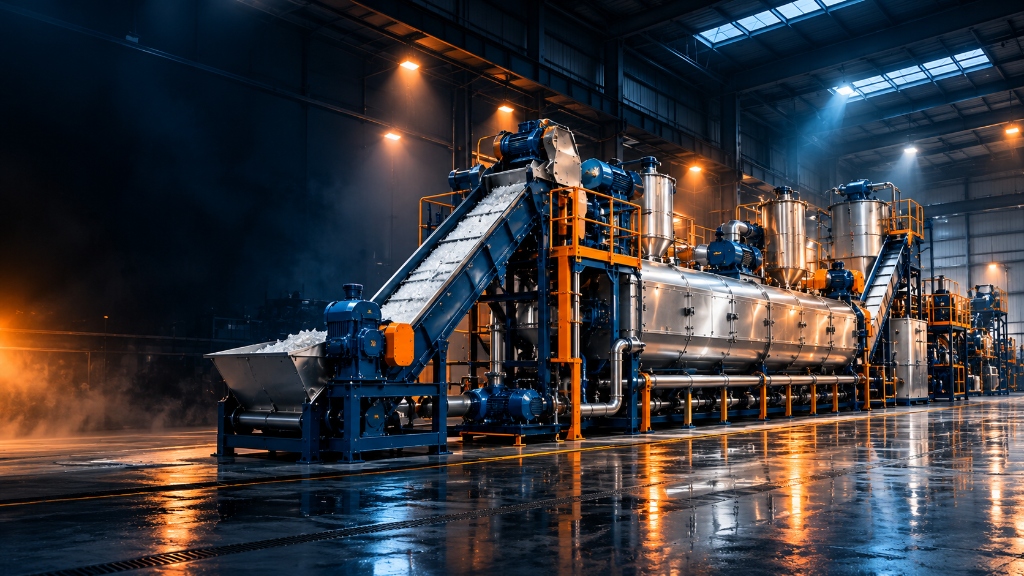
A project layout should show receiving, inspection, preparation, size reduction, washing, separation, dewatering, finished-product storage and dispatch. It should also identify operator walkways, maintenance clearances and access for moving major components.
Review electrical supply, water, drainage, wastewater handling, foundations and loading access before construction. Obtain model-specific utility requirements and installation drawings from the machinery supplier.
Project planning checklist
- Define accepted polymers and drum types
- Establish a safe inspection and rejection procedure
- Assess previous contents and contamination risks
- Confirm size-reduction method and feeding arrangement
- Select washing stages based on actual residues
- Agree on output quality and sampling method
- Plan water, power, drainage and wastewater handling
- Reserve maintenance access and finished-product storage
Conclusion
An HDPE and PP drum recycling plant should be designed around verified feedstock, safe preparation, appropriate size reduction and the required output quality. A clear process flow and site plan help reduce avoidable changes during installation.
Planning a project with ABS Polymers
Every recycling project starts with understanding the material, the required output and the operating conditions. ABS Polymers works with plastic recycling machinery and plant solutions. Share your polymer type, incoming material form, approximate feedstock availability and intended output so the process can be discussed against the actual requirement.
Explore ABS Polymers machinery, review plant solutions, or contact the team to discuss your project. Confirm model-specific specifications, included equipment, utility requirements and performance expectations in writing before finalising a purchase.