How to Choose the Right Plastic Washing Plant for PP, HDPE and Other Scrap
Choosing a plastic washing plant starts with the scrap itself. Learn how material type, contamination, output goals, washing stages, water handling and drying affect the right recycling line.
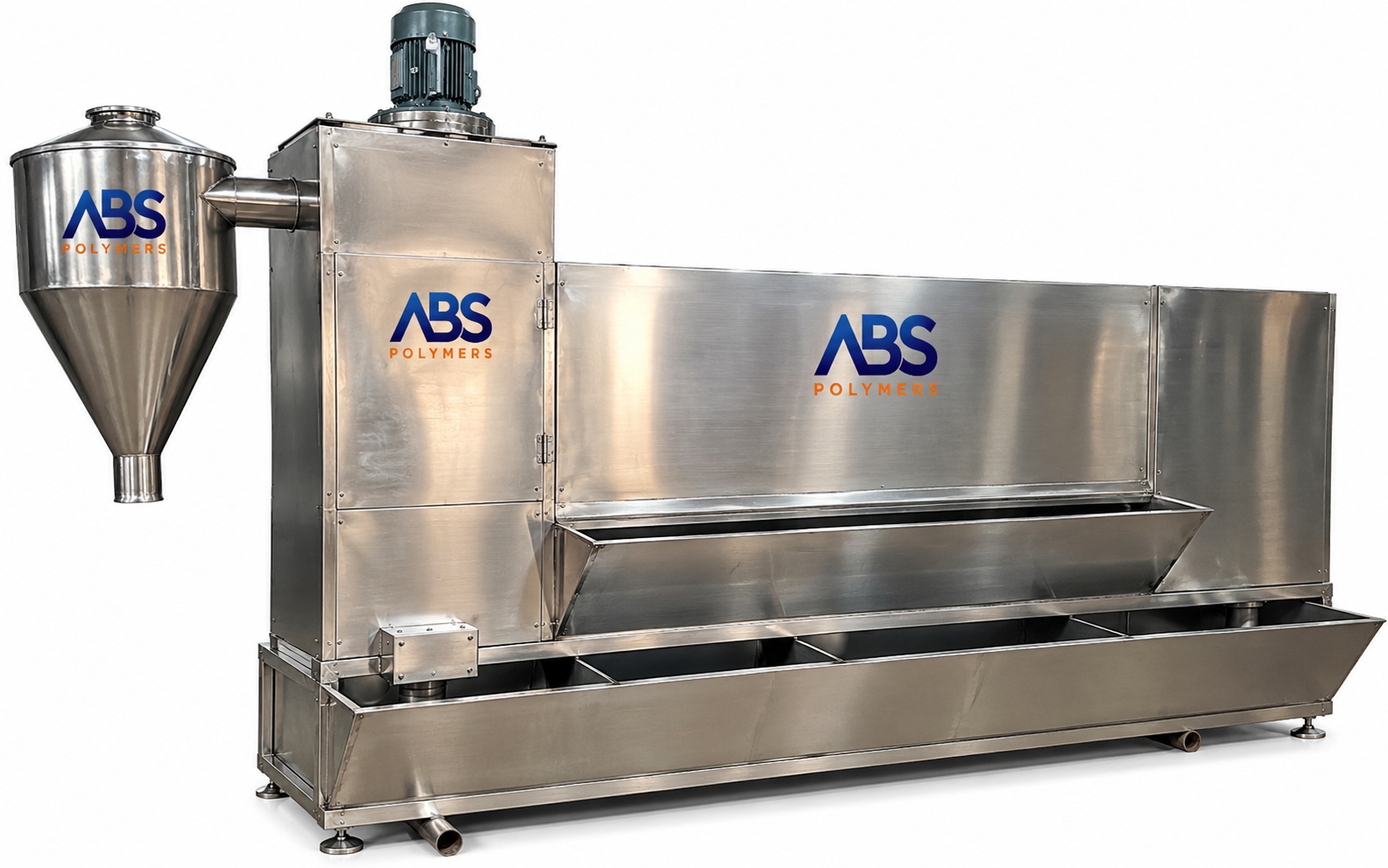
How to Choose the Right Plastic Washing Plant for PP, HDPE and Other Scrap
A plastic washing plant is a process designed around the plastic scrap entering the factory and the quality of material required at the end. Choosing the wrong configuration can leave contaminants in flakes, use more water or energy than necessary, or create bottlenecks between machines.
For recyclers, scrap dealers and plastic-processing businesses, the first step is to understand the feedstock. PP, HDPE, LDPE, PET and engineering plastics do not all behave in the same way during washing. ABS Polymers, based in Coimbatore, lists washing machinery for different plastic materials.
1. Start with the plastic material, not the machine name
Identify the polymer and the form in which it arrives. Is it rigid scrap, film, bottles, flakes, runners or mixed material? Is it post-industrial or post-consumer?
The material list supplied for ABS Polymers includes PP, HDPE, LD, HM, PC, PET bottles, nylon, Delrin and BBT. Confirm the exact polymer grade and feedstock condition with the machinery team before finalising a plant. Similar-looking plastics may need different process settings or separate washing routes.
2. Understand the contamination
The type and level of contamination determine which cleaning stages may be required. Typical issues include soil, dust, labels, paper, oil, adhesive, food residue and other polymer contamination.
A useful enquiry should include:
- Photos or a sample of the incoming scrap
- The main polymer and whether the material is rigid or flexible
- The contaminants that need to be removed
- Whether the material is already shredded or arrives as whole scrap
- The required cleanliness and moisture level for the next process
This information helps a supplier assess the process rather than recommend equipment from capacity alone.
3. Plastic washing plant stages: match the process to the job
A washing line may use a combination of size reduction, pre-washing, friction washing, hot washing, rinsing, separation, dewatering and drying. The correct sequence depends on the polymer, shape and contamination.
Size reduction: Where required, a grinder or crusher reduces scrap to a more manageable size. The target size should suit downstream washing and processing equipment.
Pre-washing and friction washing: Mechanical action and water help loosen dirt and surface contamination. The design must suit the material so useful flakes are not unnecessarily damaged.
Hot washing: Heat may be useful for selected feedstocks with stubborn oils, adhesives or residues. It is not automatically required for every plastic. Evaluate the need against scrap condition, process objective and operating cost.
Rinsing and separation: Additional washing or separation stages may be needed to remove loosened contaminants. The method depends on the polymer mix and density differences involved.
Dewatering and drying: Washed material may need mechanical water removal followed by an appropriate drying stage. Acceptable final moisture depends on the next production step and buyer requirements.
Do not assume every line needs every stage. Select the process based on trials, feedstock details and the required output.
4. Choose capacity using real input and output figures
Ask suppliers to clarify whether quoted capacity refers to input feed rate or finished washed output. These are not necessarily the same. Actual throughput can change with contamination, material shape, bulk density, moisture and operating conditions.
Share expected kilograms per hour, working hours per day, number of shifts and planned future expansion. Ask what assumptions are used for the stated capacity and whether a material trial is available.
Confirm the exact model, rated throughput and operating conditions in a written technical quotation before making a purchase decision.
5. Plan water, power, space and wastewater handling
A washing plant needs more than floor space for the machines. Plan material movement, loading and unloading access, maintenance clearance, electrical supply, water supply, drainage and wastewater treatment.
Ask for the equipment layout and utility requirements for the specific proposed configuration. Water recirculation and wastewater treatment should be evaluated as part of the complete project. Obtain values for the actual feedstock and selected machinery rather than relying on generic figures.
6. Questions to ask before placing an order
Use this checklist when comparing proposals:
- Which exact polymer and scrap form is the line designed for?
- What contaminants can the proposed process address?
- Is stated capacity input feed or washed output?
- Which washing, separation and drying stages are included?
- What are the connected load and expected utility requirements?
- What water treatment or recirculation arrangement is required?
- What floor area and operator access are needed?
- Can the supplier conduct a trial using your own scrap?
- What installation, commissioning, warranty and service support are included?
- Which specifications will be confirmed in the final quotation?
Compare proposals using the same feedstock and output requirements. A lower initial price does not necessarily mean a lower operating cost if the process is not suited to the material.
7. Discuss your feedstock before selecting a plant
Share clear photos or a sample of your scrap, identify the polymer, describe the contamination and state the required output. This gives the machinery team a practical starting point for discussing the washing process and equipment configuration.
ABS Polymers is based in Coimbatore, Tamil Nadu, and lists plastic scrap washing machines, hot washing equipment, washing and drying machines, PET bottle washing equipment and plastic scrap grinders.
Explore the scrap washing machine range and plastic scrap grinder range, or contact ABS Polymers to discuss your material and project requirements.
A suitable plastic washing plant begins with the right process for the scrap—not simply the biggest machine or the highest advertised capacity.