PET Bottle Washing Line: How Each Stage Supports Cleaner Recycled Flakes
Understand the main stages of a PET bottle washing line, from sorting and size reduction to washing, separation and final quality checks.
PET Bottle Washing Line: How Each Stage Supports Cleaner Recycled Flakes
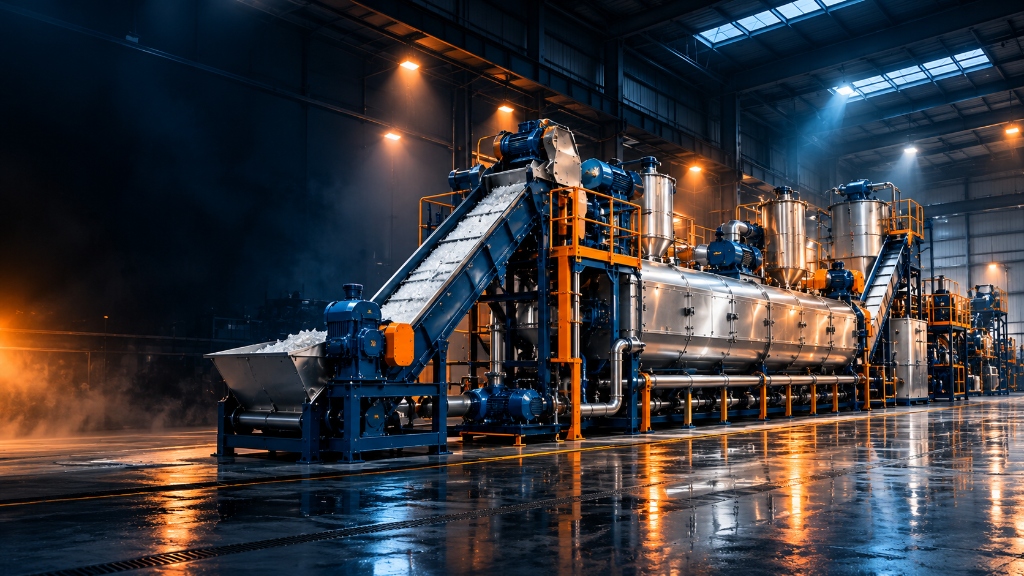
A PET bottle washing line is designed to convert collected post-consumer bottles into a cleaner material for further processing. The quality of the output depends on more than the washing machine alone. Sorting, size reduction, label removal, separation, rinsing and dewatering all contribute to the final flake condition.
The exact process configuration should be selected according to the incoming bottle quality, contamination, required output and the buyer's specification. This guide explains the main stages and the questions a plant owner should ask before selecting equipment.
1. Start with bottle inspection and sorting
Incoming PET bottles can include caps, labels, sleeves, dirt, liquid residues and non-PET containers. A sorting stage helps remove unsuitable items before they enter the main process. The inspection method may combine manual sorting with suitable mechanical separation, depending on the volume and consistency of the feedstock.
Keep heavily contaminated or unidentified material separate until it has been assessed. Do not assume that every transparent bottle is PET or that colour alone is enough to identify polymer type. A consistent incoming-material procedure makes downstream operation easier to control.
2. Size reduction and controlled feeding
Bottles are reduced into flakes so that later washing and separation stages can work on a more manageable material form. The cutting equipment, screen arrangement and feeding method should match the expected input and target flake size.
Operators should monitor feeding consistency and inspect for unusual vibration, noise or changes in particle size. Foreign objects can damage cutting components, so sorting and feed preparation are important parts of the overall line—not optional housekeeping.
3. Label and cap removal
Labels, caps and closure materials may be made from polymers or materials different from the PET bottle body. Their removal and separation are important because mixed material can affect the quality of recovered PET flakes.
The suitable removal method depends on label type, adhesive, bottle design and feedstock condition. Ask the supplier which separation stages are included and which contaminants the proposed configuration is designed to handle.
4. Washing: match the process to contamination
Washing removes dirt and residues from the flake surface. Some feedstock may require friction washing, while more demanding contamination can require additional treatment stages. Hot washing may be considered for specific residues and process targets, but it should not be treated as necessary for every input.
Before choosing a washing arrangement, identify the type of contamination and agree on how the output will be evaluated. A representative material trial is more useful than relying on a generic claim that one process suits every PET feedstock.
5. Separation, rinsing and dewatering
Separation stages help remove unwanted materials based on differences in physical properties. Rinsing can reduce remaining process residues, while dewatering reduces the water carried with the flakes.
The stages must be balanced. A bottleneck in material transfer, separation or dewatering can limit the performance of the whole line. Request a process flow diagram showing how material moves between each machine and where quality checks can be performed.
6. Define the final flake specification
Before installation, speak with potential buyers about their acceptance criteria. Specifications may cover polymer purity, contamination, moisture, colour and particle-size distribution. Sampling should be representative and follow a repeatable method.
Record incoming feedstock, process settings, sample results and rejected material. These records help identify whether a quality issue comes from the incoming bottles, a process stage or a change in operating conditions.
PET washing line selection checklist
- Identify the source and condition of incoming bottles
- Estimate the proportion of labels, caps and non-PET items
- Define target flake size and buyer quality requirements
- Confirm which washing and separation stages are included
- Review water, power, drainage and wastewater arrangements
- Check cleaning, maintenance and operator access
- Ask for model-specific capacity and utility information
- Arrange a material trial where feedstock is variable
Conclusion
A well-planned PET bottle washing line treats sorting, size reduction, washing, separation and quality control as one connected process. Select equipment around the real feedstock and the required output, and verify performance expectations before investing.
Planning a project with ABS Polymers
Every recycling project starts with understanding the material, the required output and the operating conditions. ABS Polymers works with plastic recycling machinery and plant solutions. Share your polymer type, incoming material form, approximate feedstock availability and intended output so the process can be discussed against the actual requirement.
Explore ABS Polymers machinery, review plant solutions, or contact the team to discuss your project. Confirm model-specific specifications, included equipment, utility requirements and performance expectations in writing before finalising a purchase.