Plastic Pelletizing Line: Preparing Clean, Consistent Feedstock for Extrusion
Learn why feedstock preparation, polymer consistency, moisture control and process monitoring matter when planning a recycled plastic pelletizing line.
Plastic Pelletizing Line: Preparing Clean, Consistent Feedstock for Extrusion
A plastic pelletizing line converts prepared plastic material into granules that can be stored, transported and used in downstream manufacturing. The quality of the final pellets depends not only on the extruder but also on the consistency of the feedstock and the control of each process stage.
A suitable line must be selected for the polymer, incoming material form, contamination level and required output. This guide covers the practical questions to address before planning a recycled plastic pelletizing operation.
1. Identify the polymer stream
Start by confirming which polymer will be processed. PP, PE and other plastics have different processing characteristics and should not be mixed without a validated process and a clear product specification.
Mixed or uncertain feedstock can lead to inconsistent processing and variable pellet properties. Establish a sorting and identification procedure, and confirm the intended polymer stream before choosing the extrusion arrangement.
2. Prepare feedstock before extrusion
The extruder should receive material that is suitable for its feeding system. Depending on the operation, this may mean clean flakes, regrind or another prepared form.
Check:
- Polymer identity and consistency
- Particle size and distribution
- Residual dirt and foreign material
- Moisture level
- Bulk density and feeding behaviour
- Whether the material needs blending
Feedstock preparation may include sorting, size reduction, washing and drying. The exact sequence depends on the source material and the required pellet quality.
3. Understand the role of filtration
Contaminants that reach the melt can affect product consistency and may create processing problems. Melt filtration is selected according to the material, contamination profile, production requirements and extruder configuration.
Discuss screen arrangement, changeover method and maintenance requirements with the equipment supplier. A filtration system should not be selected solely by a general mesh number without considering the actual polymer and contaminants.
4. Coordinate feeding and extrusion
Stable feeding helps the extrusion process operate consistently. Variations in bulk density, particle size or moisture can influence how material enters the machine and how the process behaves.
The supplier should review the feedstock form, expected throughput, screw and barrel configuration, heating and cooling requirements, and any degassing needs. These are application-specific design decisions; do not assume one extruder configuration is suitable for every polymer or recycled feedstock.
5. Monitor process conditions
Operators should follow the manufacturer's operating window and monitor the parameters relevant to the selected line. These may include feed rate, temperature zones, pressure, motor load and filtration condition.
Record process changes alongside the incoming material batch. This makes it easier to identify whether a quality variation is related to feedstock, machine settings or maintenance.
6. Check pellet quality
Pellet appearance alone does not establish suitability for a manufacturing application. Work with the buyer or downstream processor to define relevant acceptance criteria.
Depending on the intended use, checks may include:
- Pellet size and consistency
- Visible contamination
- Colour variation
- Moisture
- Melt flow or other agreed material tests
- Odour and physical properties relevant to the application
Use documented sampling and testing methods rather than relying only on visual inspection.
7. Plan the complete line, not only the extruder
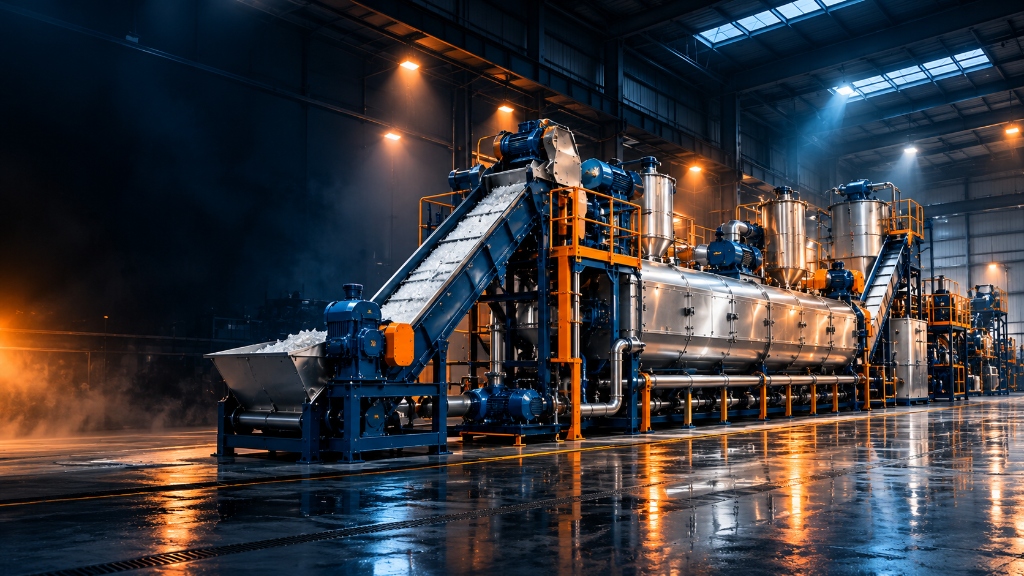
A pelletizing line may require feeding, conveying, extrusion, filtration, pellet cutting, cooling, drying and packing arrangements. The required configuration depends on the material and product specification.
Before investing, prepare:
- Polymer type and source
- Feedstock form and contamination level
- Required output and operating schedule
- Desired pellet specification
- Available utilities and floor space
- Maintenance and operator capability
- Quality checks required by customers
Discuss your pelletizing requirements
Choosing a plastic pelletizing line starts with understanding the feedstock and the final application. Explore ABS Polymers machinery, review plant solutions, or contact our team to discuss the material you intend to process.
ABS Polymers supports plastic recycling machinery and plant planning. Final equipment configuration and process settings should be confirmed against the actual polymer, feedstock quality and product requirements.