Plastic Recycling Plant Commissioning: Checks Before First Production
A practical pre-start checklist covering installation records, utilities, safety devices, dry runs, operator training and controlled production trials.
Plastic Recycling Plant Commissioning: Checks Before First Production
The period between machinery installation and regular production is important. A structured plastic recycling plant commissioning process helps confirm that equipment, utilities, controls and operating procedures are ready for controlled start-up.
Commissioning should follow the instructions of each equipment manufacturer and be performed by qualified personnel. The checklist below helps plant owners coordinate the work and maintain clear records.
1. Confirm installation against approved drawings
Before energising machinery, compare the installed arrangement with the approved layout and supplier drawings. Check machine foundations, anchoring, alignment, access platforms and maintenance clearances.
Confirm that transport restraints and temporary installation items have been removed where required. Any deviation from the approved design should be reviewed by the responsible engineer and equipment supplier.
2. Verify utilities and site readiness
Check that the required electrical supply, water, compressed air, drainage and ventilation are available for the installed equipment. Confirm that connections match the supplier's requirements.
Inspect cable routes, pipe connections, valves, isolation points and access to service areas. Do not assume that a utility is ready simply because a connection has been made.
3. Review guarding and safety devices
Before testing, inspect guards, covers, emergency stops, interlocks, warning labels and safe access routes. Confirm that isolation procedures are documented and that operators understand how to stop and secure equipment.
Never bypass a safety device to complete a commissioning test. Resolve defects before proceeding.
4. Complete electrical and mechanical checks
Qualified personnel should verify electrical protection, earthing, motor connections and control functions. Mechanical checks may include fasteners, lubrication, rotation direction, alignment and the condition of accessible moving parts.
Use the manufacturer's commissioning checklist for each machine. Record test results and obtain sign-off from the responsible personnel.
5. Perform controlled no-load tests
Where the manufacturer requires it, run equipment without process material to verify basic operation. Observe unusual vibration, noise, heat, leaks or unexpected control behaviour.
Test emergency stops and interlocks according to the approved procedure. Stop and investigate any abnormal condition rather than continuing the trial.
6. Test the line in process sequence
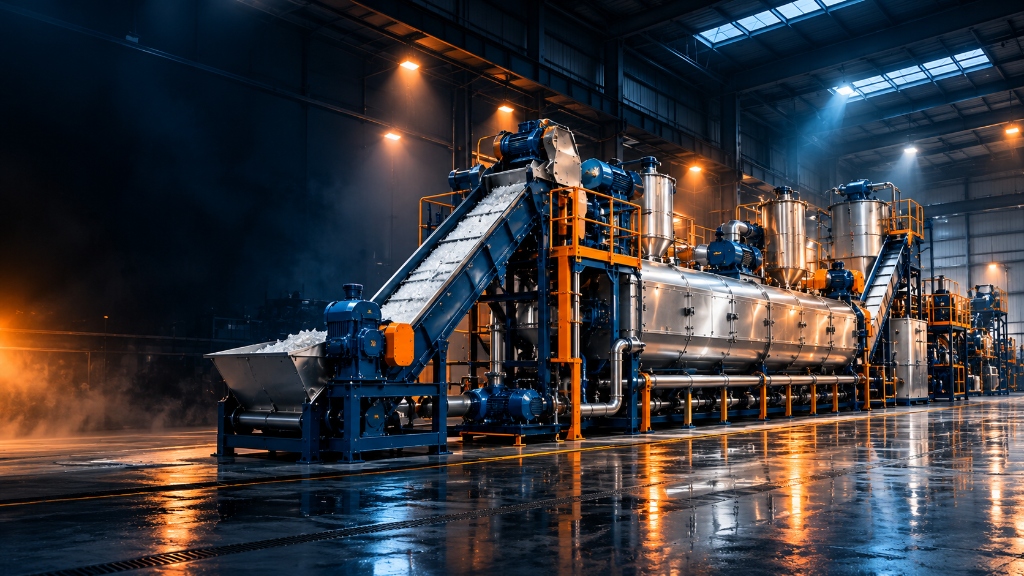
A complete recycling line includes connected machines. Confirm the intended start-up and shutdown sequence, transfer points, material flow and communication between operators.
Start with a controlled trial using an agreed feedstock quantity. Monitor the process and record any blockage, spillage, unstable feeding or quality issue. Adjustments should be made only by authorised personnel within the manufacturer's operating guidance.
7. Train operators and maintenance staff
Training should cover normal operation, start-up and shutdown, emergency response, cleaning, inspection and safe isolation. Maintenance personnel should know how to access manuals, drawings and model-specific parts information.
Keep attendance and training records. Provide clear escalation steps for faults that operators are not authorised to resolve.
8. Record the handover
A commissioning file should include:
- Approved layout and electrical drawings
- Equipment manuals and spare-parts lists
- Inspection and test records
- Safety checks and outstanding actions
- Operator training records
- Warranty and supplier contacts
- Trial-run observations and agreed acceptance criteria
Close out outstanding issues before treating the line as ready for routine production.
Prepare your plant for a controlled start
Commissioning connects installation work with safe daily operation. Review the ABS Polymers machinery range, explore plant solutions, or contact our team to discuss machinery and installation planning.
ABS Polymers supports plastic recycling machinery and plant planning. Site-specific commissioning must be coordinated with the equipment manufacturers, qualified technicians and the responsible safety professionals.